CHIRAG INTERNATIONAL / MATERIAL NOTES
Concrete begins
with a clear brief.
Explore manual and automatic concrete brick making machines, then connect the machine discussion to the bricks, blocks and pavers you want to produce.
Explore brick making machines01 / MACHINE CATEGORIES
Two starting points.
Different questions.
Understand the human input.
A manual machine discussion should begin with the work people perform around the equipment. Ask which tasks are manual, what supporting equipment is needed and how the proposed arrangement fits your production setting.
Use the category as a starting point for a precise description, rather than a promise of a particular output or cost.
Define what is automated.
Automatic machines are a separate topic on the Chirag International site. The useful comparison is the scope of the system: what the machine controls, what remains outside it and which product forms it supports.
Read the hollow block machine article with those questions in mind. A clear equipment description matters more than the label alone.
02 / BEFORE YOU COMPARE
Put the product first.
A useful purchasing brief connects the intended masonry unit to the complete equipment proposal. Keep these questions together when reading specifications or discussing an option.
What do you want to make?
Describe the brick, block or paver and its intended application. Confirm product requirements before treating similar-looking units as interchangeable.
What does the proposal include?
Ask for an itemised scope covering the machine, compatible moulds and any supporting equipment. Identify what is supplied separately.
What needs confirmation?
Request current product documentation and clear answers about site requirements, support and the limits of the proposed configuration.
03 / MATERIAL VOCABULARY
Name the output.
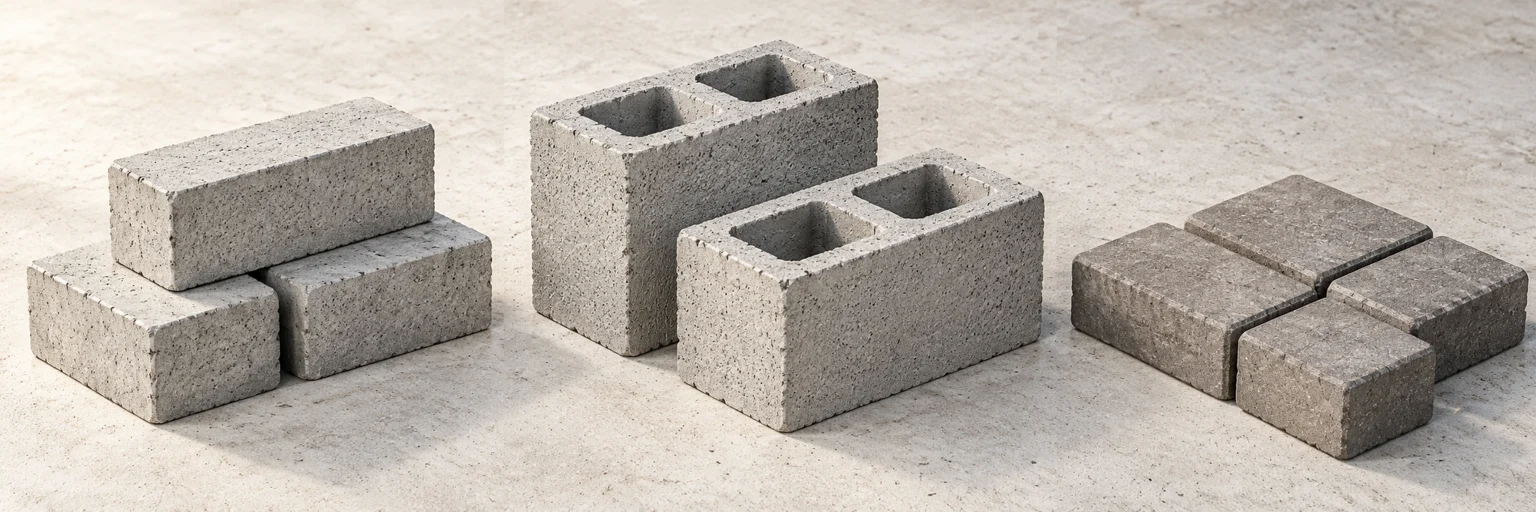
These are product families, not machine specifications. The specimens above are illustrative and do not represent a supplied mould range.
- 01 Bricks
- Small masonry units discussed in the brick making guide. Their intended use and required properties belong in the product brief.
- 02 Blocks
- Larger masonry units, including hollow forms. Explore the dedicated hollow block topic.
- 03 Pavers
- Units intended for paved surfaces. Shape is only one part of the decision; check the requirements of the intended application and confirm machine compatibility.
04 / CONTINUE READING
From material to machine.
Machine overviewBrick Making Machine — CoimbatoreProduct categoryFully Automatic Hollow Block Making Machine05 / COMMON QUESTIONS
A clearer conversation
starts here.
What are concrete brick making machines?
Concrete brick making machines form concrete into masonry units using a moulding process. The finished shape depends on the machine and compatible mould. Chirag International’s site discusses manual and automatic categories, with separate articles covering brick making and hollow block machines.
How should I compare manual and automatic machines?
Begin by comparing the work each system performs and the tasks that still need people. Ask for the precise scope of automation, the required supporting equipment and the intended product range. A category name alone does not establish output, staffing or suitability for your site.
Are bricks, blocks and pavers the same product?
No. These names describe different masonry product forms and uses. Bricks and blocks are commonly associated with wall construction, while pavers are used for paved surfaces. Product dimensions, performance requirements and suitability must be checked for the particular design and application.
Can one machine make every shape shown here?
Compatibility must be confirmed for the specific machine and mould combination. The illustrations show generic material types, not an included range of products. Ask which moulds are supported, what is supplied and which changes require additional equipment before comparing different machine proposals.
What information should I prepare before an enquiry?
Prepare a description of the product you want to make, your intended production setting and the questions you need answered. Include any known site constraints and product requirements. This gives a supplier a clearer basis for discussing a specific machine configuration and its documentation.
Does automatic mean there is no manual work?
No. Automatic describes aspects of a machine’s operation, rather than guaranteeing an entirely unattended production process. Material handling, inspection and other tasks may sit outside the machine’s automated functions. Request a clear description of the complete proposed arrangement and each person’s responsibilities.
How can I compare prices meaningfully?
Compare written proposals with equivalent scope. Identify the machine, moulds, supporting equipment, delivery terms and any separately priced items in each proposal. A single headline price cannot show whether two offers cover the same products, installation requirements or level of support.
Where can I read about specific machine topics?
Start with the brick making machine article for the broader machine topic, then read the hollow block machine article for that product category. Use these pages to build a list of questions, and request current specifications before making a decision about a particular machine.